Home  »  Car Racing  »  Drivers  »  Features  »  Formula 1  »  People  »  Videos

David Purley: Fearless

Submitted by on January 2, 201211 Comments

David Purley is a hero. Some would say an unsung one, but just a quick look at his life, and it will take you less than two minutes to realise this guy was like no other.

In brief: Paratrooper, F1 racing driver, George Cross Medal recipient, stunt pilot, Guinness Book of World Records holder… And so much more. We are only scratching the surface there. I think one word sums him up. Fearless.

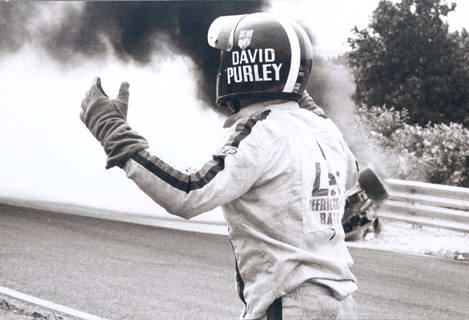
Where do we start? Purley is mostly remembered for his futile attempts at rescuing Roger Williamson from his burning car at Zandvoort in 1973. It was a  vain attempt caught live on TV. It was a tragedy that would stick with Purley, who stopped his car, ran across the track and tried to tip the car over on his own. He could hear Williamson screaming in the fire, and had little help from the marshals. His desperation, frustration and emotions are clear in the video and photos. For his efforts he earned the George Cross Medal for bravery.

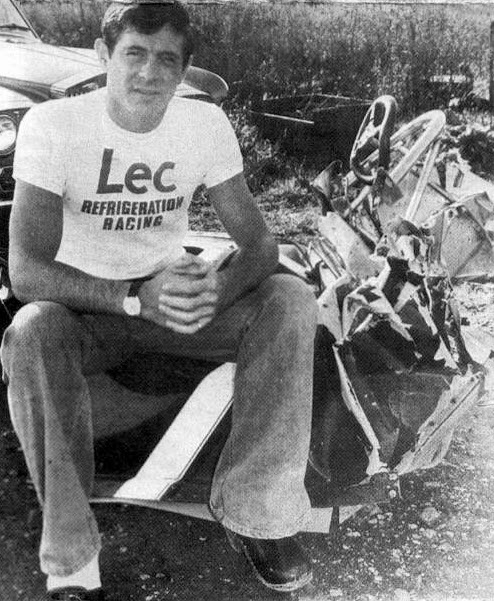
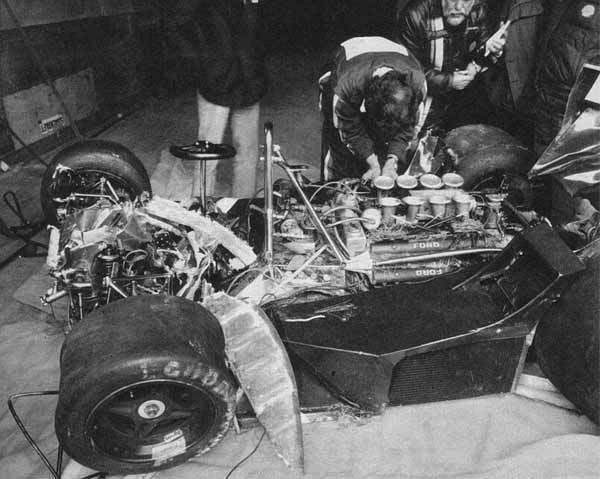
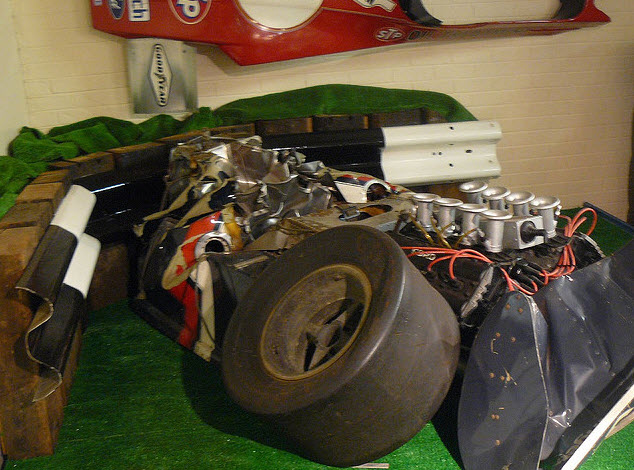
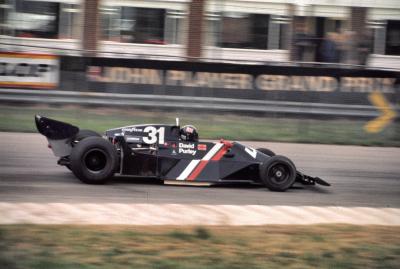
Then there is his F1 crash at Silverstone in 1977. After a fire in the morning session, fire extinguisher fluid stayed in his Lec F1 car. Entering the old Becketts the throttle stuck open, and – this is where the Guinness Book of World Records comes in – he hit the wooden sleepers head on at 108mph and went to zero in just 26 inches. The car folded around him, and the remains are on display at the Donington Motor Museum. There was not a lot left of the front end of the car. “Miracle” is not a strong enough word to describe his survival.

He made the Guinness Book of World Records, as – at the time – the impact was the largest survivable recorded at 179gs. He broke most of his ribs, pelvis in multiple places, and both legs very badly. But he came back to race again.

Once more, ‘fearless’.

There was fun too. At Zolder in 1977, a wet/dry race saw Purley lead while others pitted for dry tyres. The Brit resolutely stayed out, and refused to let Niki Lauda back into the lead. The Austrian Ferrari driver was not happy, and in very few words let his feelings be known after the race, calling Purley a “Rabbit”. Lauda finished second behind Gunnar Nilsson – the Swede’s only Grand Prix win.

At the next race Purley’s Lec had a white rabbit logo on it. The following race, Lauda had a “Super Rat” sticker on his visor… They may have been angry words in the heat of the moment, but both saw the funny side.

Sadly, Purley’s injuries meant that racing was not really an option – although he tried. To keep his adrenalin flowing he took up stunt flying aerobatic competitions in a Pitts Special. In 1985, he crashed into the sea, and lost his life.

He was the cat with nine lives that ran out. As a paratrooper, his parachute failed to open, and he landed on the shoulders of a colleague. In racing he went for it 100 percent. His attitude with Roger Williamson’s accident was exemplary. “Forget the race, that guy is dying”. He was first on the scene. He waded into the fire and tried his very best to rescue Williamson, to no avail – but he did more than the marshals that day.

Then there was his crash at Silverstone. The car was almost half its length after the impact, but despite severe injuries, there was no thought of giving up.

So he took up aerobatic flying, and that is what claimed the “Rabbit”.

He may have only started 11 Grands Prix, but David Purley will be remembered for many things, and top of the list is “hero”.

By Andy Hallbery. Follow me @Hallbean on twitter
  • m8rky

    In my opinion David is the greatest F1 driver of all time.A measure of a mans greatness does not always mean his success but his depth of character,I am currently trying to get support for a lasting memorial to David,the old Lec factory is currently being demolished to make way for a Sainsburys supermarket and it would be fantastic if they would put a tribute to David in the entrance to the store.He must be remembered by the next generation and Bognor should be proud of this truly brave and exceptional man.

  • m8rky

    Check my thread on Pistonheads,we must have a lasting memorial to David,

    http://www.pistonheads.com/gassing/topic.asp?h=0&f=42&t=1085642&i=999999&nmt=David Purley.A lasting memorial.

  • TedNes

    Thanks for the article on David Purley….I was just 5 years old in 1973, and we had no real coverage of F1 in Canada & North America at the time—at least, for a rural farmboy. The story of Purley’s attempt to save Williamson’s life did make its way around the world, though in a much more labored way than what we all have today.

    As were the late 60s, the early 70s were also a very important time in making autoracing what it is today, ultimately, much safer. My first race ever was the Canadian GP at Mosport later in 73, watching my then hero Jackie Stewart splash around the track just 15 minutes from my home in a very wet autumn race. Sadly, I would find out upon my older brothers return from Watkins Glen the following weekend, that Canadian GP race was the last in the too short career of young lion Francois Cevert.

    It’s funny, I look back now, and two things spring to mind. There seemed to be much more of a “nobility”, a knight-like quality of the drivers back then. Perhaps because we had such limited access to them—mostly print, with the odd broadcast on grainy tapes—that helped preserve the mystique, and still does to this day in my 43+ year old mind. Many of today’s drivers—F1 stars such as Hamilton and Vettel, Schumacher, Massa, as well as Indy stars Dario Franchitti, Helio Castro-Neves—are incredibly approachable, great talents, and all around fine guys. Perhaps since I can “tweet up” Dario or Lewis (I’ve received numerous responses from both, as well as Ms. Judd!), there just doesn’t seem to be the same romantic mystique.

    Secondly, David Purley was the only driver to stop and attempt to help Williamson. Later accidents—Lauda at the ‘ring in 75, Ronnie at Imola in 78—saw many more drivers stop and attempt to help. Did David Purley’s action raise the attention of other drivers, that they too needed to help their fellow competitors when and where they could?

    David Purley is indeed a true hero in so many senses. Sadly, only motorsports diehards will likely ever know his story…

  • Jonathan Barnes

    Is there a David Purley biography? If not, why not!

  • JON CIANCHETTE

    Due to the limited exposure of F1 racing at that time, plus my own high-speed car crash in 1976 and following rehabilitation, I wasn’t aware of the David Purley story. This man is, in my opinion, a perfect example of the strong-willed, competitive, life-loving, yet caring person that many would have liked to be. The difference is, he got to it, did it, and left a legacy that obviously too few are familiar with. Having had some similar, though less-extreme experiences in my time, a biographical film of his life is one I would believe strongly is long overdue. RIP, David Purley.

  • Warwick

    I stumbled accross this man purely by accident a few months ago. His story is both tragic and heroic. He did the things he did for the joy of participation. Winning, for winnings sake was not his reason for involvement.I agree with the need for a film on him. And yes RIP David Purley.

  • Tony Richardson

    I was a young apprentice at Lec back in the eighties and met and spoke to David on many occassions but never realised until this day what a hero he was, of course I knew he was an ex-racing driver but you must remember this was before the internet and before I was mature enough to understand what a true hero was.
    I still have some very vivid memories of watching him and Derek Bell walking across the front of the Lec building, David with his slight limp and this aura of being someone very special. Looking back I feel privileged to have ever met him….RIP David Purley.

  • sonya schulz

    came across this whilst look ing for some music on youtube What a hero!

  • Steve Roberts

    I was reading about the crash that killed Tom Pryce and Jansen van Vuuren in 1977 in South Africa. There was a reference to Williamson’s crash and Purley’s response to it in that article, so I looked that event up and read about it. What a brave effort and what a response the following day by David Purley – how he understood the lack of assistance from his fellow drivers. Racing in all forms until probably the new millennium was incredibly dangerous and took special persons (insane persons maybe?) to participate. NASCAR of the 1950s and 1960s, Indy car from the beginning until at least the 1990s, F1 from the start until the mid 1990s (Ayrton Senna was the last F1 driver killed, 18 years ago in 1994), and many other forms of car racing were so very dangerous. I am glad that racing is safer now, with better facilities, safer facilities, better and safer processes, where drivers walk away from unbelievable mishaps. It is good to remember David Purley and Roger Williamson, but maybe with the better conditions surrounding auto racing, there will be fewer stories like this one to read as time passes.

  • Martin Moore

    Just watched BBC’s “The Killer Years” – and just stopped sobbing! David Purley’s agonisingly forlorn attempts to overturn the burning car and extinguish the flames is absolutely heartbreaking. His body language, as he realises nothing more can be done, conveys utter the helplessness and sorrow he must have felt. Agree with all the sentiments above – RIP a real hero, bio long overdue.

  • Filmic

    W David Purley un grande Uomo