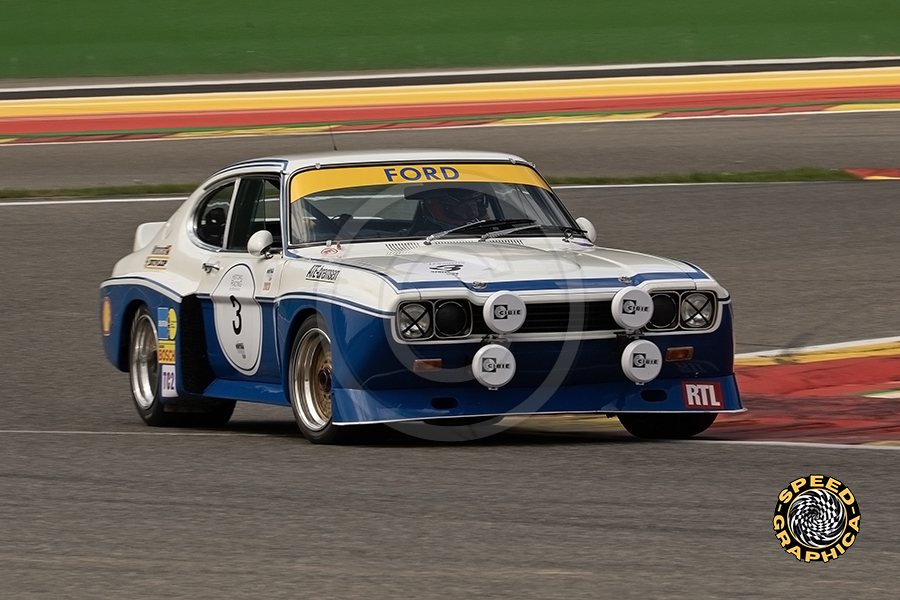
Ford Capri RS: European Touring Car Legend Part 2

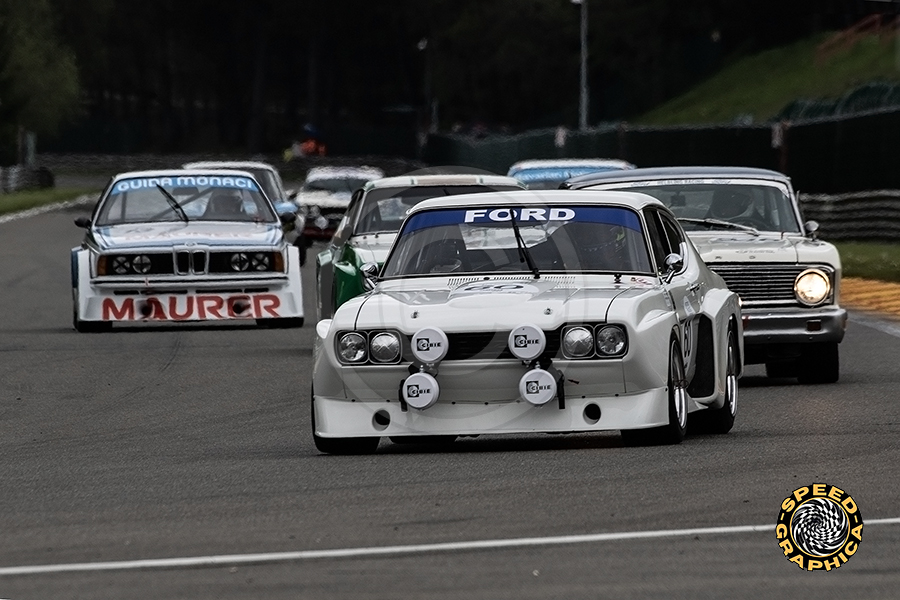
By Marcel Hundscheid / Speed-O-Graphica
We continue our story recounting the Capri’s racing history in the European Touring Car Championship.
During the summer of 1973, Neerpasch’s influence at BMW became abundantly clear. The ETCC had implemented FIA Group 2 regulations, which distinguished two divisions. Division 1 for engines under 2 litres, and Division 2 was engines above 2 litres. Because the regulations provided sufficient flexibility, Cosworth had ample opportunity to develop a power unit based on the existing Essex V6 engine of the production version, which became known as the GAA. Cosworth had developed new cylinder heads, thanks to Keith Duckworth, which had two intake and two exhaust valves and double overhead camshafts driven by exposed belts mounted at the front of the engine.
BMW hadn’t been sitting idle either, and had the even more powerful 3.5-liter version of their six-cylinder engine at their disposal, which it had equipped the CSL with in response to the 3.4-liter GAA engine used by Ford. The GAA engine, with its 3.4-liter displacement and a ZF five-speed gearbox, produced approximately 450 hp. Due to the size of the larger engine, Ford initially placed the radiators in the trunk. When it became apparent that this location didn’t provide optimal cooling, they were moved to the rear fenders.
To get the whole package homologated, both brands were required to develop a production road-legal version equipped with an engine displacing more than 3 liters. BMW cleverly handled this by increasing the engine displacement of the production CSL to 3,003 cc. Ford, in turn, released a series of 250 Capri RS3100s equipped with an engine measuring just under 3,100 cc.
The battle between the two rivals in the ETCC intensified, and when Ford made a step forward, BMW promptly responded. For example, Neerpasch at BMW responded to the latest development of the Capri by equipping the CSL with a revised top end, wider tires, and a rear spoiler that spanned the entire rear. The 3.5-liter engine was equipped with a double overhead camshaft with four valves per cylinder, making its performance practically equal to Ford’s GAA.
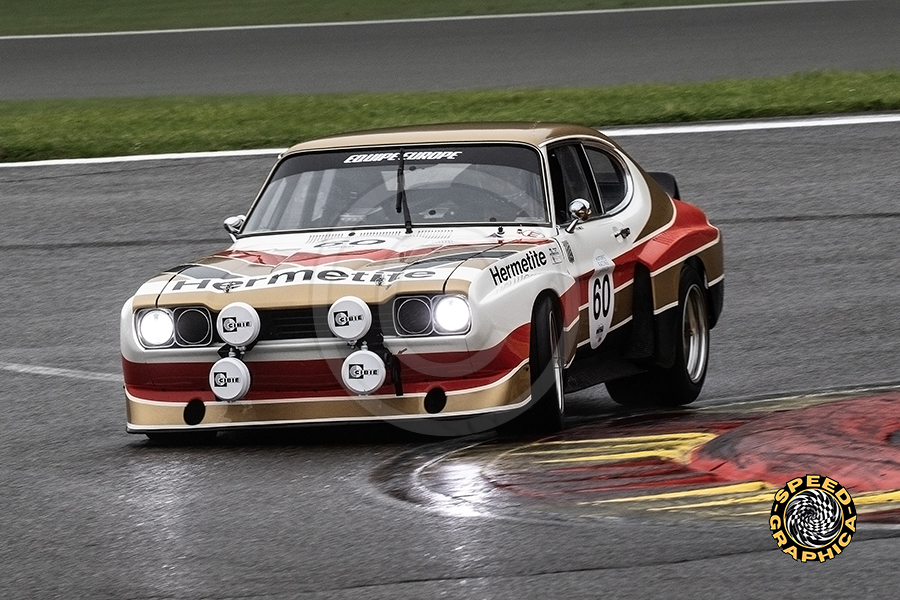
The 1973 oil crisis then turned motorsports upside down. As a result, both Ford and BMW paused and significantly curtailed their activities. The Ford and BMW factory teams for example only started two of the six scheduled races that year.
BMW entered just a single BMW CSL for the second round of the ETCC championship at the Salzburgring, with Hans-Joachim Stuck and Jacky Ickx. Ford on the other hand, entered two Capris. Jochen Mass and Niki Lauda drove the first car during the 4-hour race, while Dieter Glemser and Toine Hezemans piloted the second Capri. Because both Capris retired prematurely due to engine problems, BMW easily took victory.
BMW and Ford each entered two cars for the six-hour race at the Nürburgring. Both Capris were defeated in qualifying by the BMW of Ronnie Peterson and Hans-Joachim Stuck. The race turned into a war of attrition for BMW, with both cars retiring prematurely due to mechanical failures. Ford had to watch helplessly as Jochen Mass somersaulted in one of the Capris. The second Capri managed to secure second place despite a broken differential.
Ford was still waiting for a first win for the new Capri and entered two cars for the races into the races Zandvoort and Jarama. BMW decided not to field a factory team for these races and relied on privately entered CSLs. Toine Hezemans and Dieter Glemser formed a team for Ford, as did Jochen Mass and Rolf Stommelen.
During the race at Zandvoort, Hezemans was comfortably leading in front of his home crowd until BMW privateer Urs Zondler rear-ended the unfortunate Dutchman. Hezemans however refused to give up and literally used his teeth to repair the powerline to the fuel pump, which had been cut off, by using the wiring from his taillights. With five laps down, Hezemans resumed the race, though he was unable to prevent Jochen Mass and Rolf Stommelen from securing victory in their Ford Capris.
The 1974 season finale took place in Jarama, Spain, and although Ford had already secured the manufacturers’ title early on, the drivers’ title was still to be decided. Hans Heyer was in the best position for Ford, driving an Escort prepared by Zakspeed.
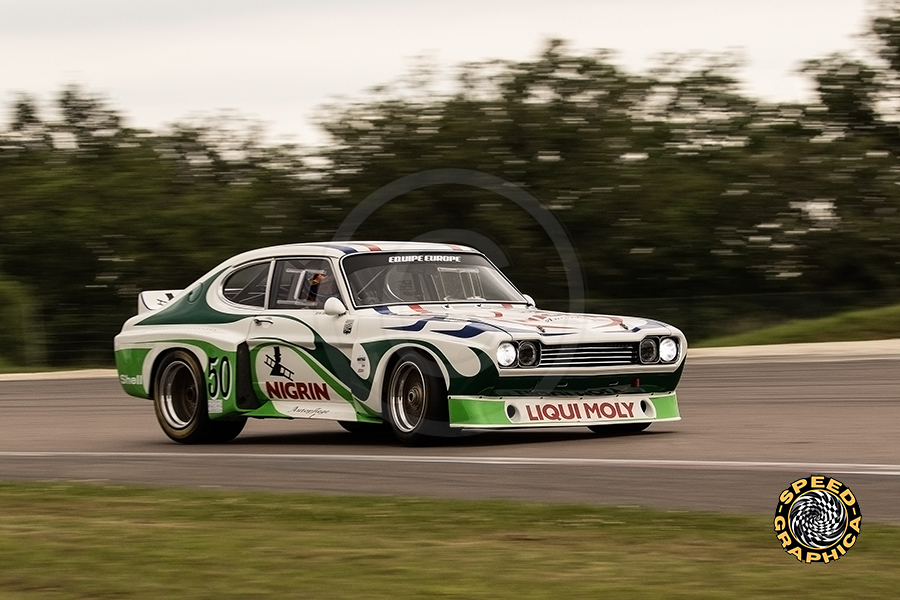
For the 4-hour race, Ford entered a single RS 3100 driven by championship leader Hans Heyer, who in turn was joined by Klaus Ludwig and Toine Hezemans. Heyer had the last-minute option to either start his usual Escort or share the Capri with Ludwig and Hezemans. The Dutchman drove both cars at Jarama, taking the Capri to pole position. Heyer decided to drive the Capri anyway. The trio drove more or less unchallenged to victory.
Besides the ETCC, Ford also competed in other series, such as the renowned German DRM Championship and the 1000 km races of the World Championship. Rolf Stommelen triumphed at the DRM Eifelrennen at the Nürburgring with the Capri RS 3100, ahead of Toine Hezemans. That same year, Stommelen also won the support race during the German F1 Grand Prix at the Nürburgring, which was also part of the DRM Championship. Thanks to Klaus Ludwig, Ford also took victory with the Capri RS 3100 at the DRM race in Hockenheim.
Ford competed for the last time at the 1974 6 Hours of Kyalami with the RS 3100. Jochen Mass and Toine Hezemans drove the Capri to fifth place, simultaneously taking victory in the touring car class. Two remaining factory cars were later entered in local races, but were not very successful.
The deployment in South Africa also marked the end of the Capri RS3100’s use as a factory car, partly due to the struggling economy. BMW, on the other hand, deployed the CSL with great success both in Europe and across the Atlantic.
Enthusiasts of historic touring cars from the 1970s can still thoroughly enjoy cars like the Ford Capri around the world. Fortunately, these cars remain cherished by drivers who raced them extensively back then, as well as the younger generation of drivers who seem to be increasingly interested in all the beauty that historic motorsport has to offer.