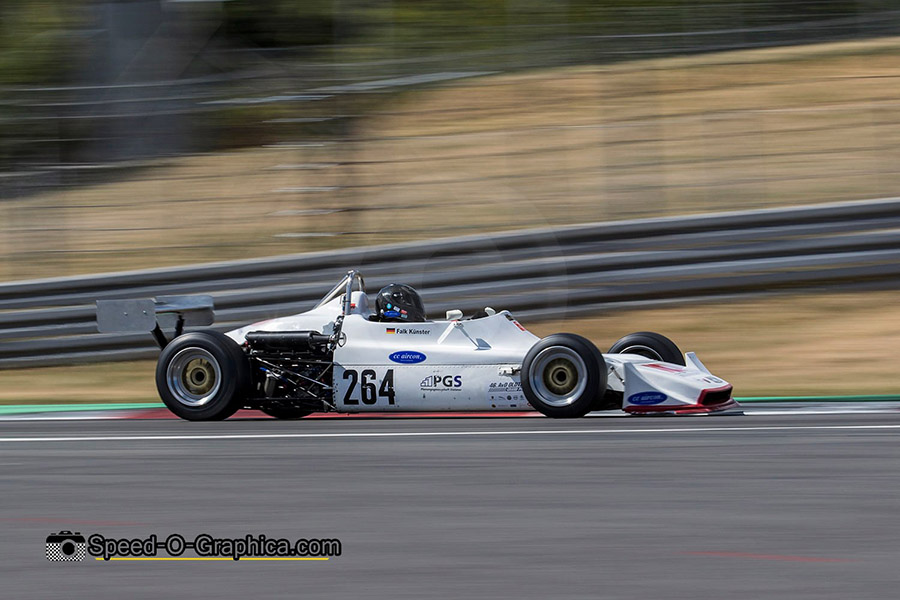
Formula 3: The Origins, 1971-1984 Part 6

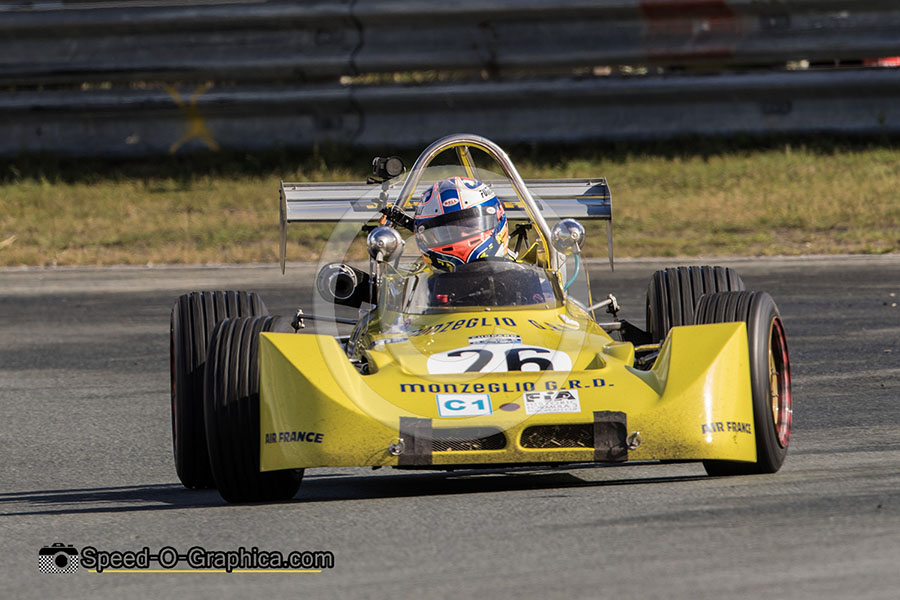
In our sixt part of our retrospective about the origins of Formula 3 1971-1984 and the major F3-constructors, we take a closer look at Eifelland, Ensign and GRD.
Eifelland
Although Eifelland certainly does not belong to the target audience of this series of articles, we would like to briefly explain this brand name due to its unique character. There was little to no question of a constructor in the literal sense, as Eifelland did not come up with its own creations.
Eifelland was in fact a Formula 1 team from Germany, named after the caravan manufacturer Eifelland, which was owned by Günther Hennerici. The German was born near the Nürburgring, hence the connection to the Eifel Mountains.
Hennerici expanded his activities in 1971 by establishing his own racing team. Initially, the team focused on participating in Formula 3, in which his wife, Hannelore Werner, was among those competing.
After entering Formula 1 with Rolf Stommelen in 1972, he purchased a number of March 723s. Hennerici used modified nosecones, after which the cars were known as the Eiffelland 23. Although his modified F3 cars only competed in Germany, they achieved a number of notable results.
Ensign
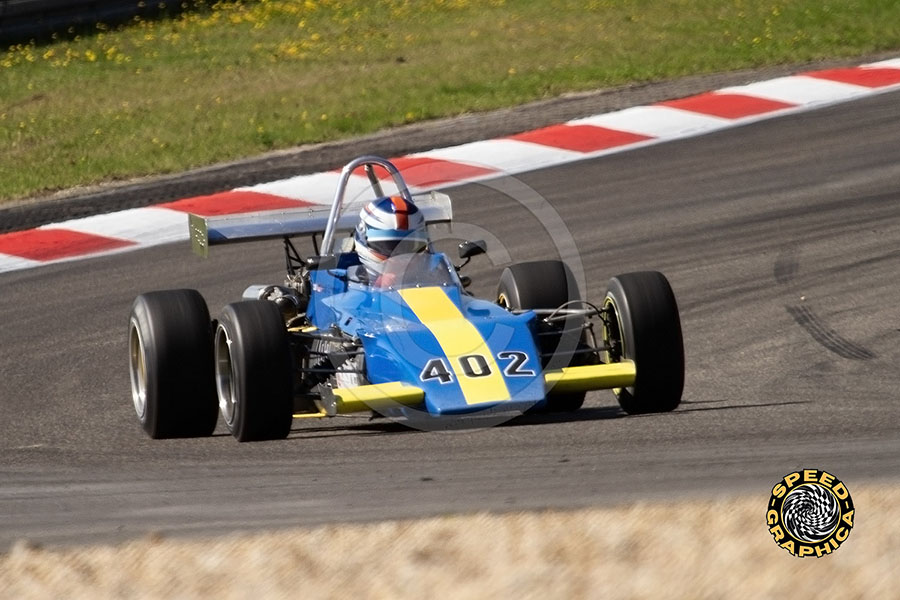
Morris, “Mo”, Nunn founded Ensign Racing in 1973. Before Nunn primarily made a name for himself as a constructor, he raced single-seater cars himself during the 1960s. Nunn acquired a three-year-old Cooper-Climax in 1962, with which he made his debut as a driver. Later, he moved to Formula 3 with a Lotus. He achieved considerable success with a Lotus 41, particularly in 1967. In addition to races in Formula 3, Nunn also competed in Formula 2.
When plans to race in Formula 5000 failed, he decided to construct cars himself. He believed he could engineer better designs than the Lotus Works cars he had raced. Under the name Ensign, the F371 appeared in 1971, although the designation LN1 was used more frequently later on, which enjoyed considerable success. Incidentally, he had built the prototype in the garage behind his house. The LN1 subsequently debuted at Brand Hatch in March 1971 and immediately secured second place thanks to Bev Bond.
In 1972, the F372 appeared, proving to be the fastest, particularly on the straights. However, the moment the brakes were applied, it was a different story. Midway through the season, Nunn implemented a number of adjustments that led to the F372 crossing the finish line first again by the end of the season.
1973 was the last year in which Nunn built F3 cars, as he had shifted his focus to Formula 1. Ensign’s best drivers had left for March, while Nunn poached Dave Baldwin from Lotus. He designed a greatly improved car with which Brian Henton managed to achieve victories towards the end of the season.
GRD
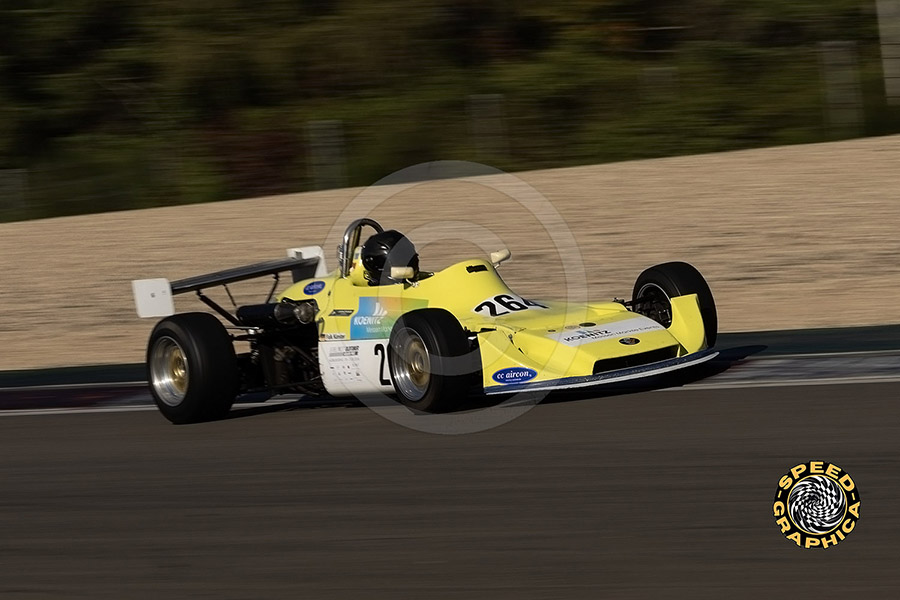
Mike Warner, Dave Baldwin, Derek Wild, and Gordon Huckle formed Group Racing Developments by joining forces with the local engineering company, Griston. They were employees who had previously worked at Lotus, but when that manufacturer decided to cease producing racing cars, the staff were looking for new work. Designer Jo Marquart, who had previously worked at Huron, was added to the team. GRD was particularly successful in its early years because Brabham also stopped producing racing cars. Things went so well that GRD merged with Denys Dobbie’s DART team in 1973. However, the tide turned very quickly, as when Dobbie withdrew in early 1974, GRD ceased production at the end of that year.
GRD presented their first F3 creation in 1972, the GRD 372, which was a great success from its debut. In 1972, the 372 scored no fewer than 19 victories. GRD used an aluminum monocoque including a tubular subframe. The 372 was particularly sought after because the car was easy to drive, while the setup was also quite simple.
The 373 appeared in 1973, which was nowhere near as successful as its predecessor. The changes GRD had made were primarily intended to make this model easier to produce. Problems with the chassis were later resolved, after which nine victories could still be added to the record.
1974 was not a positive year for Formula 3, and particularly in the United Kingdom, the starting grids were nothing to write home about. Although GRD decided to use the same chassis, the new nose section and the relocated radiators on the GRD 374 stood out. However, it was of little use, as real successes failed to materialize.
GRD’s final F3 creation appeared in 1975, the 375, which was essentially an improved 374. What immediately stood out were the radiators, which had been relocated to the rear once again. At the end of 1975, the curtain fell for GRD for good, after which the F3 operation was taken over by Van Dieman.
In a next part of F3, The Origins, 1971-1984, we look among others at Lola.