Europe’s finest during the 70s & early 80s, the DRM-championship: part 3

By Marcel Hundscheid / Speed-O-Graphica
We continue our retrospective about one of Europe’s leading touring car championships from the late seventies and early with this third part featuring the 1977 racing season.
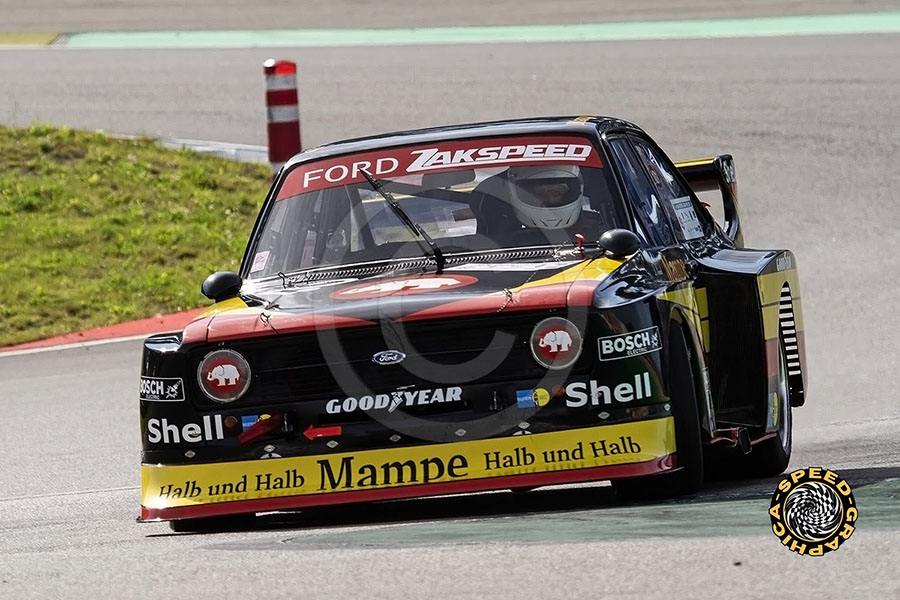
From 1977 onwards, the unrestricted Group 5 super touring cars were allowed to compete in the DRM (German Racing Championship). This ushered in a period in which touring cars were to know absolutely no limits. It would become the most iconic period of the DRM championship, which gained a large fan base far beyond Germany as well.
Cars looked impressive, often featuring enormously widened fenders and wings. Generally the participating cars were equipped with turbo engines that had a displacement 1.4 times smaller than their predecessors. Group 5 cars from this era were not only spectacular and impressive to look at, but they were also very expensive and were consequently only fielded in limited numbers until 1982.
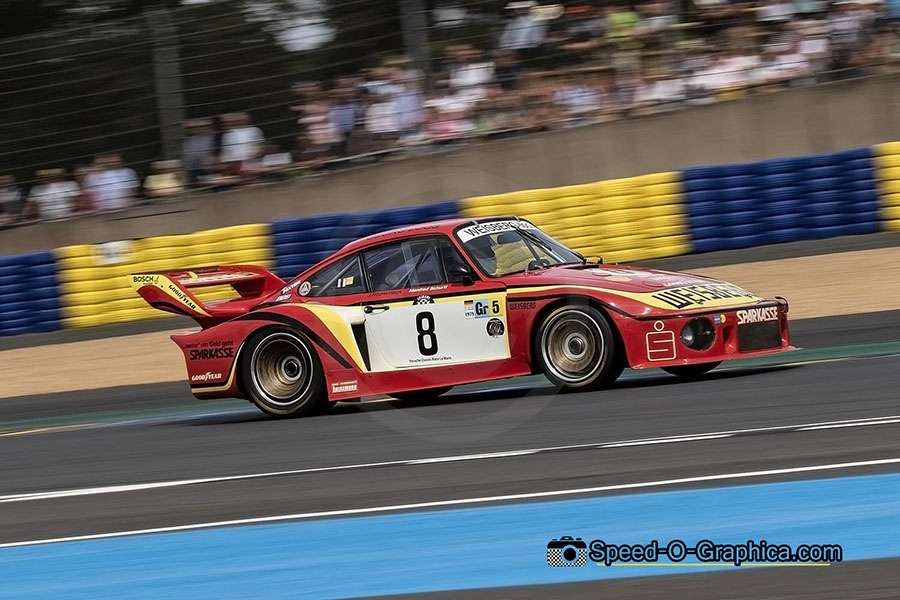
By allowing Group 5 cars, the organizers opted for the same vehicle class that had been competing in the World Sportscar Championship. The popularity of the championship subsequently rose to unprecedented levels.
Great was the surprise when, during the opening race of the 1977 season at Zolder in Belgium, no fewer than 21 cars were entered in the smaller Division 2. In the large Division 1, there were 12, and this caused some disappointment. Ultimately the switch to turbo engines was also made in Division 2.
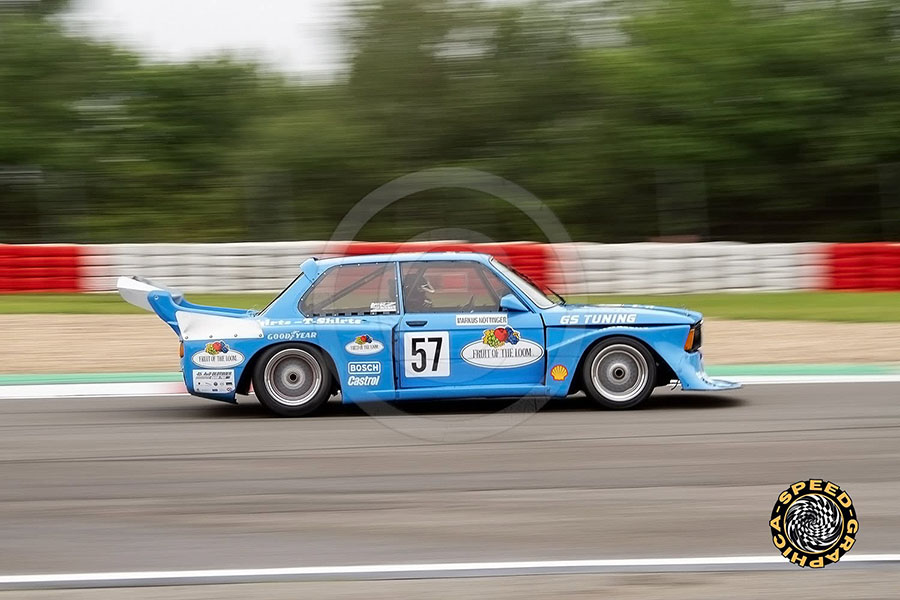
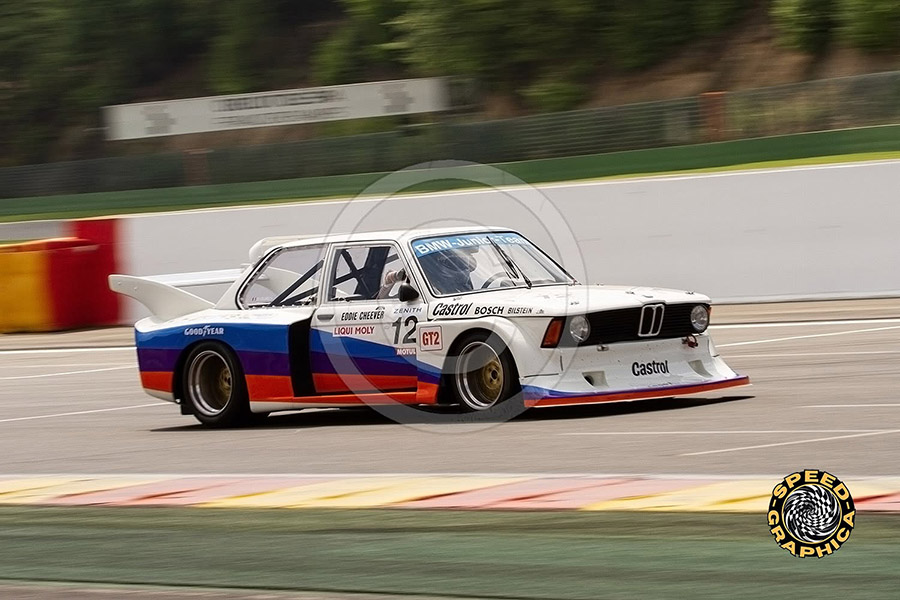
BMW for example entered Division 2 with the Junior team, consisting of Manfred Winkelhock, Eddie Cheever, and Marc Surer. Surer won the opening race in Division 2 and finished second in the overall standings behind Manfred Schurti. BMW initially still used the two-liter M12 engine that was also used in Formula 2.
BMW’s in-house tuner Schnitzer however, was already a step ahead. The BMW 2002 they fielded used a custom-prepared 1.4-liter turbo engine, allowing them to start in Division 2. The performance of the small turbo engine was impressive; Harald Ertl for example, set the fastest lap.
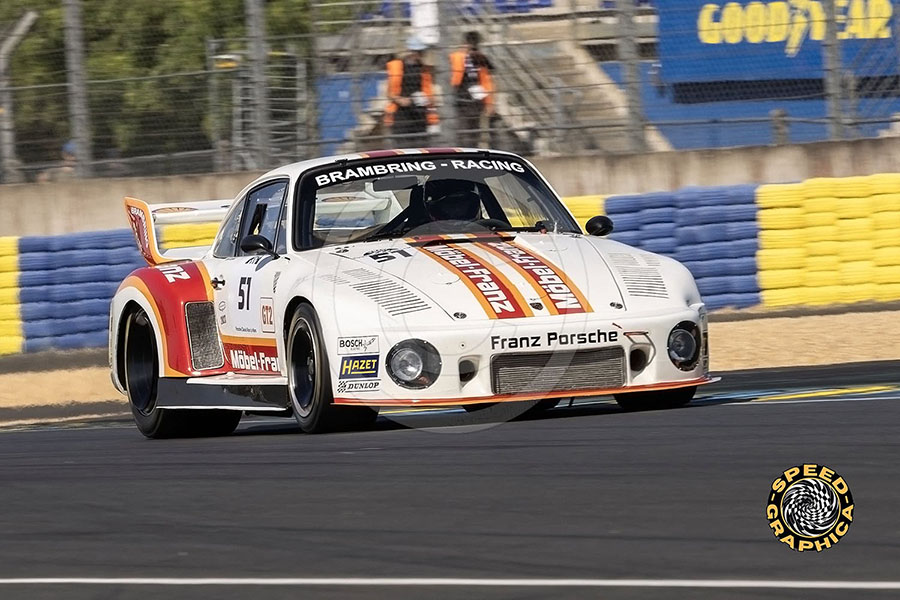
Porsche also had the best chances two weeks later when the second race of the season was held at the Nürburgring. This time it was Rolf Stommelen who tasted the sweetness of victory with a Gelo Racing Porsche 935.
The 1977 season became a pure Porsche affair, with a battle between Kremer Racing and Georg Loos Racing. It would be a fierce battle, as both teams became literal arch-rivals. Georg Loos relied on Rolf Stommelen, while Kremer Racing fielded the Frenchman Bob Wollek.
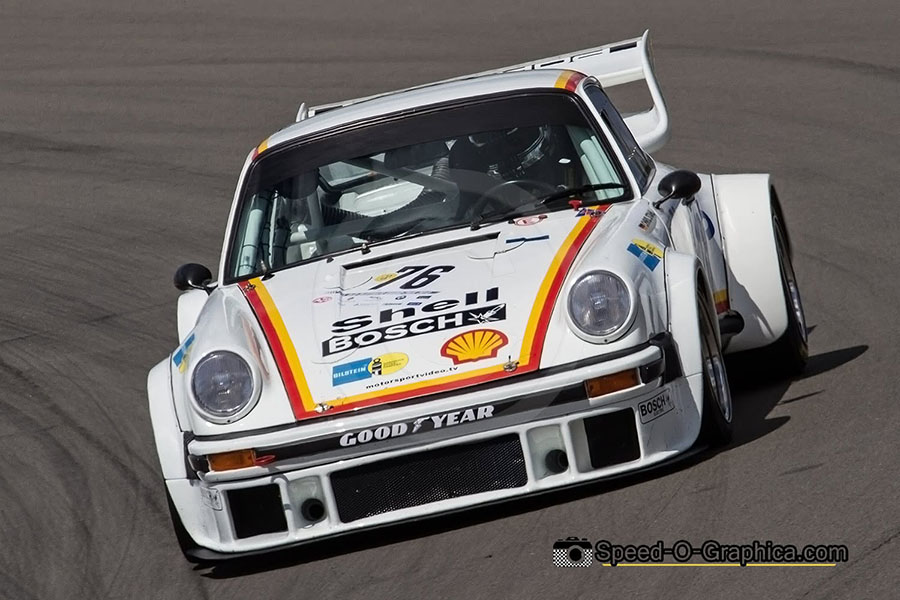
Porsche debuted the Porsche 935/2.0 ‘Baby’ during the second half of that season. This was a special variant of the 935 equipped with a six-cylinder engine of only 1,428 cc, which, according to the regulations, could be entered in Division II.
Porsche had developed the ‘Baby’ specifically to take on BMW and Ford in the two-liter class. The 935 ‘Baby’ was developed in just four months and was primarily a signal to the competition, who believed that Porsche could not compete for victory in the two-liter division.
Porsche could be anything but happy with the debut, as Jacky Ickx did not reach the finish line due to, among other things, an overheated engine.
Nevertheless, the Porsche 935 weighing only 750 kg, held enormous potential, which was confirmed during a DRM race at the German Grand Prix when Jacky Ickx convincingly claimed the class victory. Ickx crushed the competition during qualifying and held a fifty-one-second lead when he crossed the finish line.
It was more than striking that, after Ickx had driven the Porsche to victory, the manufacturer from Zuffenhausen was of the opinion that the competition had been silenced and sent the 935/2.0 Baby to the museum.
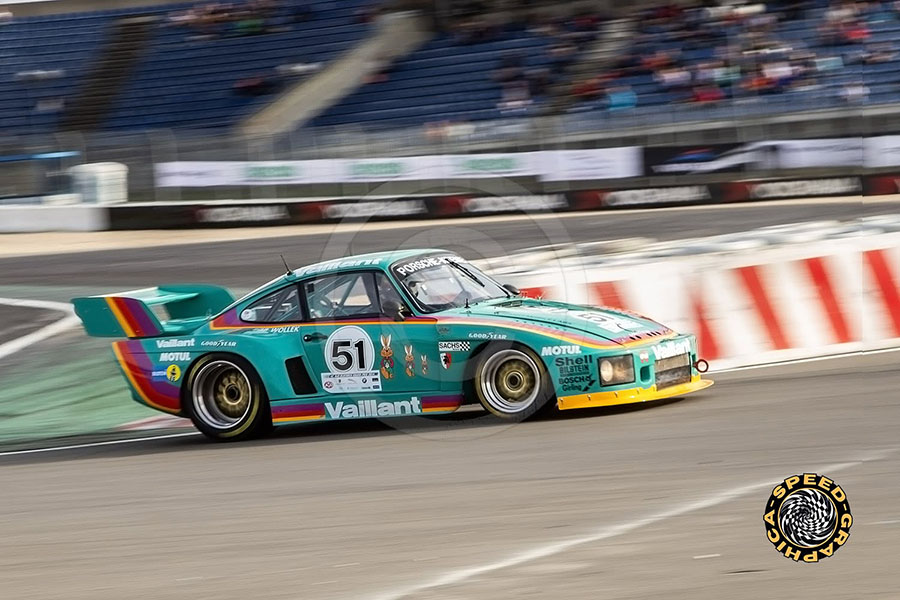
The title fight for the 1977 championship was decided during the very last race at the Nürburgring. Rolf Stommelen had already secured victories that year at the Norisring and in Diepholz. At that moment, Stommelen and his direct competitor Bob Wollek had the same number of points and both could still lay claim to the championship. However, Stommelen reigned supreme during the race in the Eifel with his Gelo Racing 935, and Wollek had to settle for second place. In doing so, Stommelen became the very first champion in Group 5 of Division 1.
In Division 2, Schnitzer (BMW) and Porsche proved that one could also compete for the top honors in the two-liter class with a turbo. Incidentally, Schnitzer did not only enter a BMW 2002; that year, they also fielded a Toyota Celica in Division 1 for Harald Ertl.
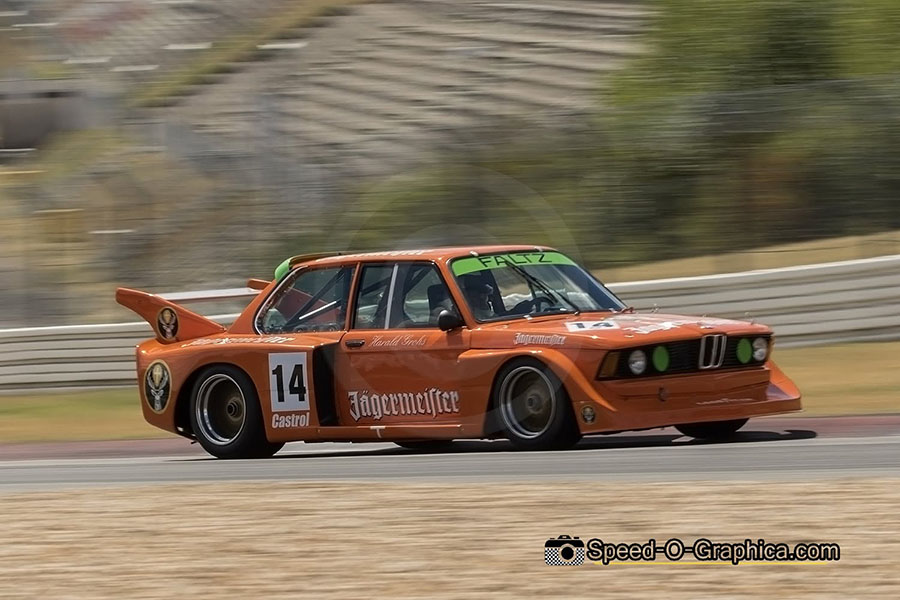
Incidentally, BMW drew considerable attention to itself that year with their BMW Junior Team, consisting of Eddie Cheever, Marc Surer, and Manfred Winkelhock. Cheever and Surer were often overconfident, and their aggressive driving style cost the team points. However, they did ensure they got the crowd on their feet. Manfred Winkelhock, on the other hand, was the most consistent. As a result, the BMW Junior Team managed to win no fewer than eight of the ten DRM races in the junior division that year. To be fair, it must be mentioned here that BMW took full advantage of the fact that Hans Heyer’s Zakspeed Ford Escort was too heavy. Heyer claimed the DRM championship title in 1976.
Results 1977 DRM Championship
- Rolf Stommelen, Porsche 935
- Bob Wollek, Porsche 935 K2
- Manfred Winkelhock, BMW 320
In the next part of our retrospective about the iconic DRM championship, we look back at 1978 and 1979.
