Formula 3, The Origins, 1971 – 1984, Part 5

By Marcel Hundscheid / Speed-O-Graphica
In our fifth part of our retrospective about the origins of Formula 3 1971-1984 and the major F3-constructors, we take a closer look at Cooper, Crossle and Dallara.
Cooper
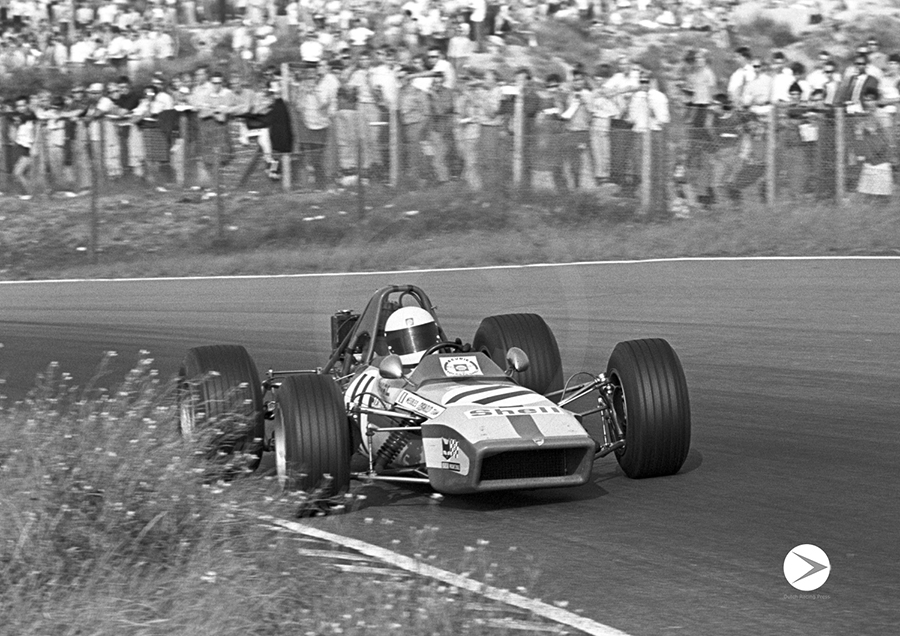
Cooper was no stranger to the world of single-seaters, as evidenced by the models that had already competed in F1 and F2. The moment the new F3 chapter began, Cooper started producing customer cars. Ken Tyrrell operated the factory car for Jackie Stewart, who was then still at the beginning of his career.
What did not benefit Cooper was the departure of Jack Brabham, who had played a major role in the development of the cars. Brabham was in turn replaced by Bruce McLaren who did not stay for long, as he founded his own team.
Cooper experienced this firsthand, as their F2 and F3 cars were anything but competitive, with the result that customers stayed away. Cooper eventually withdrew completely from racing in 1969.
Cooper’s first F3 was the T72 from 1964, designed by Eddie Stait and Neil Johanssen. A BMC 998 cc four-cylinder engine served as the power unit, producing 88 hp. Cooper fielded the T72 in the 1964 British Formula 3 season. The T72 won no fewer than nine of the ten races that year, driven by Jackie Stewart and John Taylor. Incidentally, Stewart won the championship that year.
A year later, Cooper introduced an improved version of the T72, which was known as the T76. It was powered by a 1.0-litre Cosworth MAE or BMC four-cylinder engine. Partly due to the success of the earlier T72, Cooper was able to sell nineteen cars. However the T76 was nowhere near able to match the great success of the T72, as the other manufacturers had not been idle and had closed the gap with Cooper. In addition, Jackie Stewart had moved to Formula 2.
The next variant in the lineup was the T83 from 1966, itself once again an evolution of the T76. The rear suspension had undergone a complete metamorphosis to match the geometry of the Cooper T81 F1. Cooper also used a number of other parts from the T81. Ultimately, the T81 proved to be an unmitigated disaster, particularly when the car got up to speed. Only seven cars were built by Cooper.
Cooper built just two cars of the 1967 T85. As with the T83, the suspension was inboard, and otherwise the T85 closely resembled the earlier variant. Notably, there is no known information as to whether the T85 was ever used in races.
© Winau Berkhof / Dutch Racing Press
Crossle
Crossle was an Irish constructor that was certainly no stranger to motorsport. In addition to single-seaters used in F2, F3, and F5000 among others, Crossle also built sports cars, although its era in Formula 3 was short-lived and anything but successful. Dating from 1964 was the Crossle 6F of which three were built. Five years later the 17F appeared, though it was never fielded outside the Irish mainland. The reason lay primarily in a lack of development time. Finally, in 1973, the Crossle 26F was spotted. This was derived from the 22F with which Crossle competed in F2. However the 26F was never entered in a race. Thus an end came to a far from successful period. In stark contrast were Crossle’s FF1600 and FF2000 cars, which were not only very successful but were also built in large numbers.

Dallara
Dallara would leave an indelible mark on Formula 3, as would later become apparent. Giampaolo Dallara started his career at Ferrari, although he later also worked for Maserati and Lamborghini. In the late 1960s, De Tomaso had recruited him for their F1 and F2 cars. It was not until 1972 that Dallara decided to found his own company, Dallara Automobili. In 1974, he began the development of the Iso-Marlboro IR F1 car for the Williams F1 Team. Among other things, he was responsible for the racing versions of the Lancia Stratos and Beta Monte Carlo.
In this serie, we look at the development up to 1984, although Dallara also achieved success outside its own country in Italy, particularly after this period.
Dallara’s first home-developed F3 car dated from 1981 and was given the typical designation 381, featuring an aluminium monocoque and standard suspension. Incidentally, the 381 was rarely seen outside Italy and was known for its high speed on the straights. A year later, the 382 followed, which was itself a slightly modified variant of the earlier 381. The geometry was adjusted to accommodate the Pirelli tyres. Other modifications included reprofiled sidepods, while Dallara had reinforced the engine bay.
The successor to the 381 was the Dallara 382 which achieved considetable success in Italy, as did the national F3 championships in Germany and England, where it was extremely competitive against Ralt and Reynard. The Dallara 382 was succeeded a year later by the 383, which featured a number of minor improvements over the earlier model. The 383 was fielded almost exclusively in Italy. Like the earlier 383, the 384 was a car characterized by minor modifications and, with the exception of just one victory, could be considered barely successful in Italy itself.
In the next episode of our series about the origins of Formula 3 1971-1984 we take a closer look at Eifelland, Ensign and GRD.
